
Jooble is a global job search aggregator that collects job listings from thousands of websites and displays them in one searchable platform. Instead of hosting most job listings itself, Jooble gathers vacancies from company career pages, recruitment agencies, classifieds sites, and other job boards, allowing users to discover opportunities from multiple sources in one place.
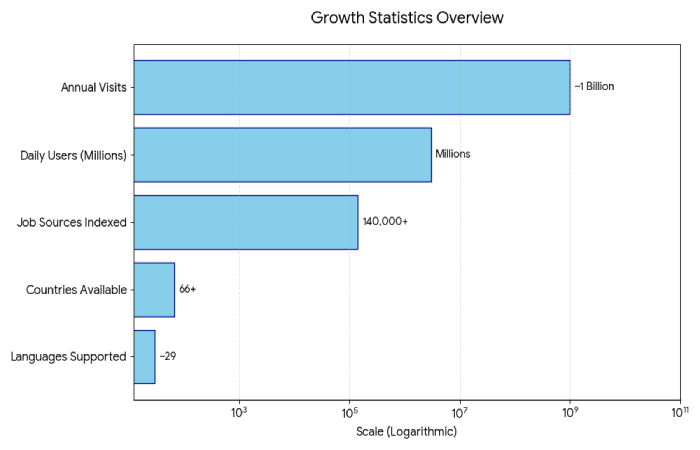
Founded in 2006 in Kyiv, Ukraine, Jooble operates across 66+ countries and dozens of languages, indexing jobs from over 140,000 online sources worldwide.
Unlike traditional job boards, Jooble works more like a job search engine—similar to how Google indexes websites—making it primarily a job discovery platform rather than a job hosting platform.
Table of Contents
Understanding the Jooble Model
Most beginner explanations simply call Jooble a job board. That’s misleading.
Jooble is fundamentally a job search engine.
Types of Job Platforms
| Platform Type | Example | Core Function |
| Job Aggregator | Jooble | Collects jobs from many websites |
| Job Board | Indeed | Employers post jobs directly |
| Professional Network | Networking + job postings | |
| Search Feature | Google for Jobs | Indexes structured job listings |
Because Jooble aggregates jobs instead of hosting them, users usually apply on external websites after clicking a listing.
Jooble’s History
Jooble’s growth story reflects the broader evolution of the online job search industry.
Origins: Jooble was founded in 2006 by Roman Prokofiev and Eugene Sobakarev, two Ukrainian entrepreneurs who wanted to simplify the job search process. The idea came from the founders’ frustration with fragmented job listings across different websites.
Early Growth: The startup launched from a small development project created by two students and quickly gained traction. Within six months, the company began generating operating profit.
Major Milestones
| Year | Milestone |
| 2006 | Jooble was founded in Kyiv |
| 2008 | Introduced monetization through traffic referrals |
| 2014 | Received investment from Horizon Capital |
| 2019 | Ranked among the most visited job search platforms |
| 2020 | Acquired job aggregator Hotwork |
| 2022 | Launched iOS and Android mobile apps |
These developments helped Jooble grow into a global employment platform with millions of daily users.
Growth Statistics
Where Are Jooble’s Services Available?
Jooble is a global platform designed to work across different geographic markets. The platform currently operates in 66 countries and supports multiple languages, allowing job seekers to search locally or internationally. This global reach makes Jooble particularly useful for remote job searches and international opportunities.
| Category | Subcategory | Details |
|---|---|---|
| Geographic Availability | North America | United States, Canada |
| Europe | UK, Germany, France, Spain, Poland | |
| Asia | India, Philippines, Indonesia | |
| Middle East | UAE, Saudi Arabia | |
| Africa | Nigeria, South Africa | |
| Latin America | Brazil, Mexico | |
| Language Support | Major Global Languages | English, Spanish, French |
| European Languages | German, Polish, Italian | |
| Asian Languages | Indonesian, Vietnamese | |
| Regional Support | Multiple local translations |
How Jooble Works?
Understanding how Jooble works is important for both job seekers and employers.
Step-by-Step Process
- Jooble’s crawler scans job listings across the internet.
- Listings are indexed in the Jooble search engine.
- Users search for jobs using filters and keywords.
- Clicking a job redirects the user to the original website.
Jooble aggregates listings from:
- corporate career pages
- recruitment agencies
- classifieds websites
- job boards
- social networks
Job Search Filters
| Filter | Purpose |
| Location | Find jobs near you |
| Salary | Filter by compensation |
| Job type | Full-time, part-time, freelance |
| Experience level | Entry-level to senior |
| Date posted | Recent listings |
Jooble Traffic and Market Presence
Below is a simplified representation of Jooble’s growth in usage.
Estimated Platform Growth
| Year | Estimated Daily Visitors |
| 2008 | 300 |
| 2009 | 14,000 |
| 2014 | 600,000 |
| 2019 | 2.7 million |
| Today | 3+ million |
Traffic Growth Trend
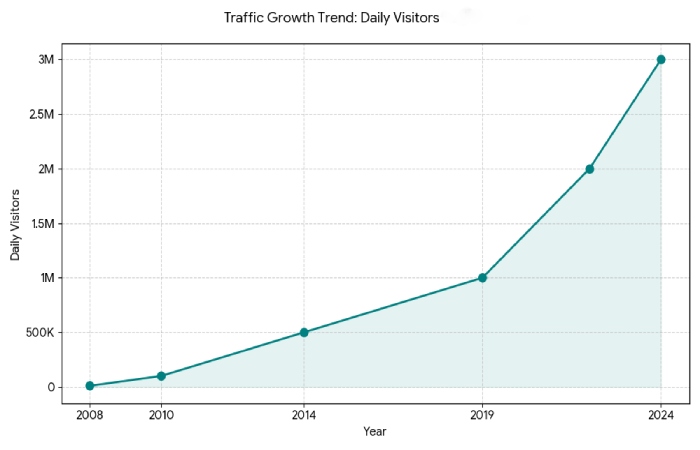
The growth illustrates the rapid expansion of job aggregation platforms.
What Are the Costs?
For Job Seekers
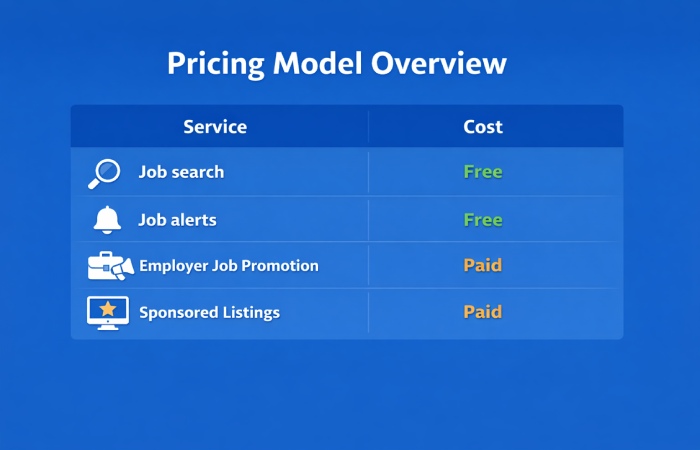
Jooble is free for job seekers.
Users can:
- search jobs
- Receive job alerts
- access listings
The company primarily earns revenue through advertising, sponsored listings, and referral traffic to partner job boards.
For Employers
Employers may pay for:
- sponsored job placements
- premium listings
- traffic referrals
Pricing Model Overview
Jooble Apps and Platforms
Jooble expanded beyond web search by launching mobile apps. The mobile apps were launched globally in 2022, allowing users to search and apply for jobs from smartphones.
Supported Platforms
| Platform | Availability |
| Web browser | Yes |
| Android app | Yes |
| iOS app | Yes |
App Features
| Feature | Description |
| Job search | Keyword and location search |
| Alerts | Push notifications |
| Filters | Salary, experience, location |
| Apply redirects | External applications |
Comparison With Other Job Platforms
To understand Jooble’s position in the job search ecosystem, it’s helpful to compare it with major competitors.
| Feature | Jooble | Indeed | Glassdoor | |
| Platform type | Aggregator | Job board | Network + jobs | Employer review site |
| Job hosting | Mostly external | Internal postings | Internal postings | Internal postings |
| Networking features | No | Limited | Strong | Limited |
| Salary insights | Limited | Moderate | Moderate | Strong |
| Global reach | High | High | High | Moderate |
| Application process | Redirect | Internal | Internal | Internal |
Platform Use Cases
| Use Case | Best Platform |
| Discover jobs across many sites | Jooble |
| Apply directly to employers | Indeed |
| Networking and referrals | |
| Company culture research | Glassdoor |
Pros and Cons of Jooble
Pros
| Benefit | Explanation |
| Large job database | Aggregates listings from many websites |
| Time-saving | One search replaces multiple sites |
| Global availability | Useful for international jobs |
| Free platform | No cost for job seekers |
Cons
| Limitation | Explanation |
| Redirect applications | Users often leave Jooble to apply |
| Duplicate listings | Aggregated sources may repeat jobs |
| Outdated jobs | Listings may expire on original sites |
These limitations are common across aggregator platforms.
Reviews and User Feedback
Jooble receives mixed reviews depending on user expectations.
Trustpilot Rating: Jooble currently holds around 3.9 out of 5 stars based on user reviews.
Positive Feedback
Users frequently mention:
| Positive Aspect | Explanation |
| Easy interface | Simple search process |
| Many job listings | Aggregates many sources |
| Helpful alerts | Email notifications for new jobs |
Some users report successfully finding employment through the platform.
Common Complaints
| Issue | Explanation |
| Irrelevant job alerts | Not always perfectly matched |
| Redirect confusion | Applications occur on external sites |
| Outdated listings | Jobs may already be filled |
Community discussions online sometimes criticize aggregator sites because they redirect to expired or external listings, which can frustrate users expecting direct applications.
When Jooble Is Most Useful
Jooble performs best in certain job-search scenarios.
| Scenario | Why Jooble Works |
| Early-stage job search | Discover many opportunities quickly |
| Remote job hunting | Aggregates global listings |
| Market research | Compare salary and job availability |
| Niche industries | Finds listings from smaller job boards |
When Other Platforms May Be Better
It is not always the best choice. A smart strategy is to combine multiple platforms.
| Goal | Better Platform |
| Professional networking | |
| Employer applications | Company career pages |
| Industry-specific hiring | Niche job boards |
SEO Insight: Why Jooble Ranks So Well
From an SEO perspective, it is a strong example of an aggregator SEO strategy.
| Factor | Impact |
| Massive index | Millions of job pages |
| Long-tail keywords | “Job + location” searches |
| Structured job data | Helps search engines understand listings |
| High search intent | Job seekers search daily |
These factors allow Jooble to rank for queries like:
- “jobs near me”
- “remote developer jobs”
- “customer service jobs in London”
Final Takeaway
Jooble has established itself as one of the world’s largest job search aggregators, helping millions of users discover employment opportunities across thousands of websites in one place. Instead of functioning like a traditional job board, it operates more like a search engine for jobs, collecting listings from company career pages, recruitment agencies, and other job platforms.
With availability in 66+ countries, support for multiple languages, and indexing from over 140,000 job sources, Jooble provides a powerful tool for broad job discovery—especially for people exploring international or remote opportunities.
However, because many listings redirect to external websites for applications, it works best as a job discovery platform rather than a complete job application ecosystem. For job seekers, the most effective strategy is to use Jooble alongside other platforms like LinkedIn or Indeed to maximize opportunities and access the most up-to-date listings.